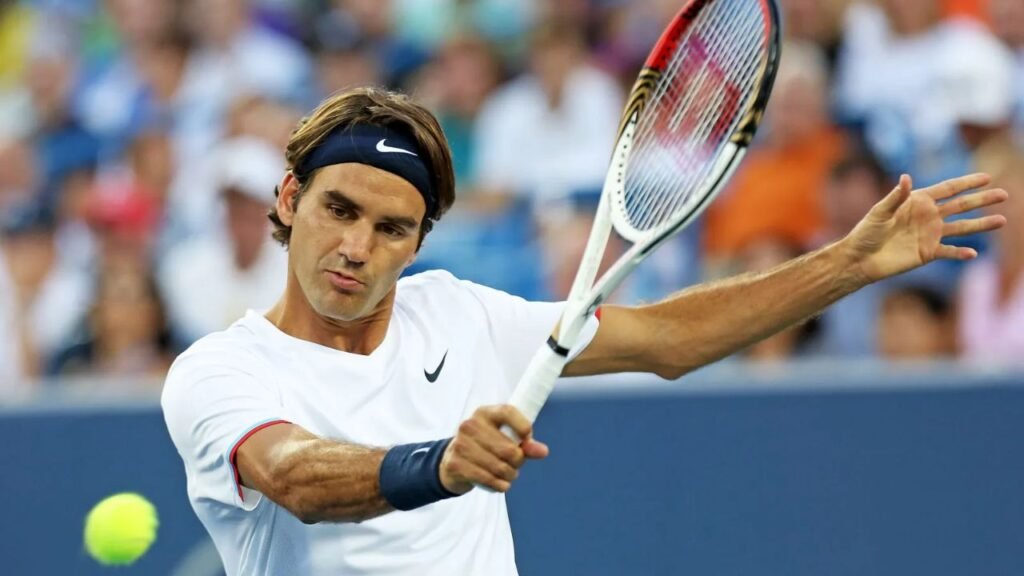
While 20-time Grand Slam champion Roger Federer is globally recognized as the quintessential pride of Swiss sports, his multicultural ancestry spans across continents. Born in Basel to a Swiss father and a South African mother, the tennis legend possesses a unique blend of European heritage that extends from the German-speaking cantons of Switzerland to the Afrikaner communities of southern Africa. Beyond defining his dual citizenship, this international background fundamentally shaped both his worldview and the trajectory of his extensive philanthropic endeavors.
Federer’s family roots reflect a distinct blend of distinct regional lineages. His paternal side originates in Berneck, a municipality located in the canton of St. Gallen near the Austrian border, anchoring his ancestry firmly in Swiss-German traditions. Conversely, his maternal lineage traces back to South Africa, where his mother belonged to the Afrikaner population—a cultural group historically rooted in Dutch, French Huguenot, and German settler heritage.
Swiss Paternal Lineage
Federer’s father, Robert Federer, was raised in the eastern region of Switzerland. His hometown of Berneck belongs to the predominant German-speaking area of the country, which naturally influenced the linguistic environment of the Federer household. Growing up near Basel, Roger learned Swiss German as his native tongue alongside standard German and French.
The term “Swiss-German” primarily denotes a cultural and linguistic classification within the Swiss Confederation rather than recent lineage from Germany. For generations, the paternal line of the Federer family remained firmly settled within Swiss borders, establishing deep local roots prior to Roger’s birth in August 1981.
South African Heritage
The maternal side of the family introduces an international dynamic. Federer’s mother, Lynette Federer (née Durand), was born and raised in South Africa. Her family heritage is tied to the Afrikaner community, whose ancestral roots originated through European settlement in southern Africa over several centuries.
Afrikaner identity centers around shared history and the Afrikaans language, a linguistic derivative of 17th-century Dutch. Through his mother’s side, Federer shares ancestral connections to historical Dutch, French Huguenot, and German emigrants, creating a complex European heritage that eventually converged in southern Africa.
Parental Ciba-Geigy Connection
The meeting of Roger Federer’s parents resulted from international corporate expansion in the late 20th century. During the 1970s, Robert Federer traveled to South Africa for work while employed by the Swiss chemical and pharmaceutical enterprise Ciba-Geigy, a company that subsequently merged to form Novartis healthcare company.
It was during this professional assignment that Robert met Lynette Durand. The couple eventually married and chose to establish their home together in Switzerland. They raised two children in the Basel area: an elder daughter named Diana, followed by their son, Roger.
Dual Citizenship Identity
Questions surrounding Federer’s nationality frequently arise due to his dual family roots. From a legal and administrative standpoint, Federer holds citizenship in both Switzerland and South Africa. However, distinction must be drawn between holding ancestral citizenship and establishing a sporting nationality.
Throughout his illustrative career, Federer competed officially under the Swiss flag across all international sanctioned events. While his heritage is undeniably split between two nations, his upbringing, training, and residential baseline remained permanently anchored in Switzerland, making Swiss identity the cornerstone of his public life.
Philanthropic Southern Focus
Federer’s connection to South Africa transcended basic family ties, influencing his major life decisions off the court. Childhood visits to his mother’s birthplace fostered a lasting relationship with the region, eventually steering his personal charitable priorities toward southern Africa.
Established in 2003, the Roger Federer Foundation prioritized early childhood education across several African nations. The charitable initiative targeted educational improvement programs in South Africa, Namibia, Zimbabwe, Malawi, Zambia, Botswana, and Lesotho, directly channeling his sporting success back into his mother’s home region.
Historic Cape Town Event
The formal intersection of Federer’s athletic legacy and South African heritage occurred in February 2020. Playing in his mother’s home country, Federer faced long-time rival Rafael Nadal during the “Match in Africa” exhibition staged at the Cape Town Stadium.
The charity exhibition drew more than 50,000 attendees, setting an official record for tennis attendance while generating millions of dollars for his foundation’s educational programs. The event highlighted how deeply the South African public claimed Federer as a home-country athletic figure despite his career representing Switzerland.
International Tennis Legacy
Despite his dual heritage, Federer’s athletic accomplishments represent the high point of Swiss sporting history. He represented Switzerland across four Olympic Games, capturing a men’s doubles gold medal alongside Stan Wawrinka at Beijing 2008 and a singles silver medal at London 2012.
In 2014, Federer spearheaded Switzerland’s historic victory in the Davis Cup, securing the national team’s first title in the competition. These international team accomplishments, combined with his 20 Grand Slam singles crowns, solidified his legacy as the most prominent ambassador for Swiss sports history.
Final Thoughts
Roger Federer’s cultural identity provides a compelling example of modern international heritage within elite sports. While he remains universally recognized as a Swiss icon who dominated world tennis under the Swiss flag, his South African lineage through his mother, Lynette, provided an essential dimension to his identity. This dual heritage expanded his personal story beyond European athletics, driving significant humanitarian achievements in southern Africa that will endure long past his retirement from professional competition.