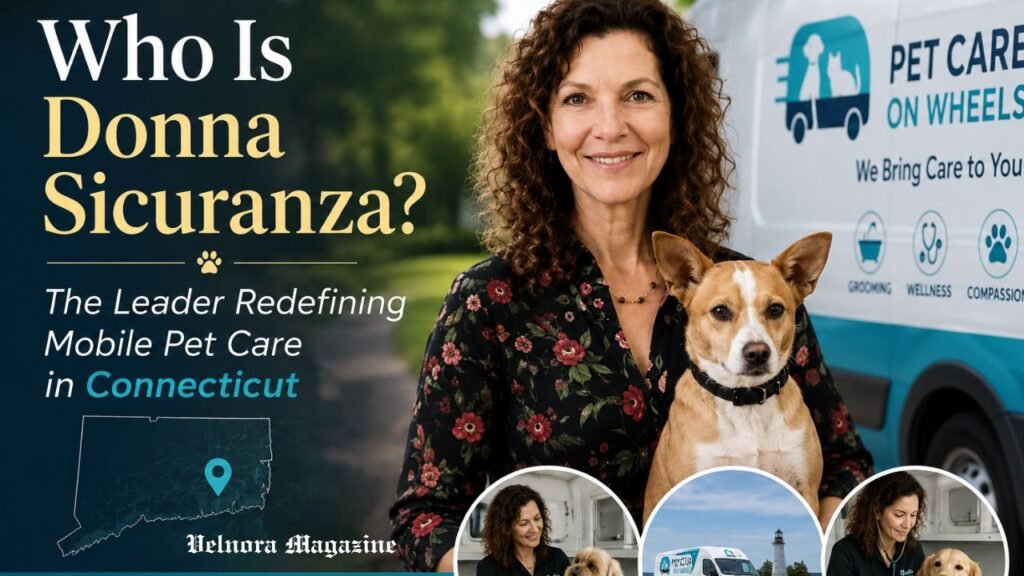
Under the leadership of non-profit executive Donna Sicuranza, Connecticut’s pioneering mobile animal welfare initiative, Tait’s Every Animal Matters (TEAM), has reached a historic milestone by sterilizing and vaccinating more than 225,000 domestic and feral cats across the state. Founded to eliminate financial and geographic barriers to pet healthcare, the organization’s customized 28-foot mobile surgical clinic has reshaped community feline population control across more than 25 municipalities. By delivering accessible preventive care directly to local neighborhoods, Sicuranza’s grassroots model has fundamentally lowered shelter intake numbers and established a replicable national framework for humane animal advocacy.
Feline Overpopulation Crisis
During the early to mid-1990s, municipal animal shelters and local rescue groups across Connecticut faced an overwhelming influx of unwanted litters. Traditional brick-and-mortar veterinary practices were increasingly out of reach for fixed-income seniors, low-income families, and independent rescue volunteers. With few affordable options available, overextended municipal facilities were forced to rely on high euthanasia rates to manage the growing stray population.
Recognizing that waiting for policy shifts or private market fee reductions was inefficient, Donna Sicuranza joined forces in 1996 with veterinarian Dr. John A. Caltabiano, who served as president of Tait’s Every Animal Matters. Supported by a critical bequest from local animal advocate Vernon A. Tait, the duo formulated an ambitious strategy to bring high-volume surgical services directly to communities in need.
On March 1, 1997, the organization deployed its initial 22-foot retrofitted mobile clinic onto Connecticut highways. Despite operating in compact quarters with a minimal crew, the mobile team sterilized and vaccinated 10 cats on its inaugural day. This proof of concept laid the ground for a statewide movement that challenged established paradigms in veterinary care delivery.
Overcoming Early Skepticism
The rollout of Connecticut’s first mobile feline surgical suite was initially met with substantial resistance from traditional veterinary establishments. Critics expressed concern that a subsidized mobile unit would compromise clinical standards or undercut established private practices. However, Sicuranza maintained a focused public relations and operational defense, demonstrating that mobile high-volume operations strictly adhere to rigorous medical standards.
Rather than competing with traditional clinics, the mobile service tapped into an unserved market segment of pet owners who otherwise would never have sought professional medical care. Sicuranza’s background in non-profit administration, strategic communications, and public relations proved vital in navigating municipal regulations and building sustainable trust across diverse communities.
Mobile Operational Blueprint
The operational framework engineered under Sicuranza relies on centralized administration paired with strategic field deployment. Rather than accepting walk-ins, the organization coordinates scheduling through a dedicated toll-free line (1-888-FOR-TEAM). Custom-designed 28-foot mobile surgical units travel to pre-scheduled public parking lots, community centers, and park-and-ride sites across 25 towns, dramatically reducing transportation obstacles for residents.
Every cat admitted to the mobile surgical suite receives a standardized, comprehensive care package for one flat, subsidized fee. This streamlined approach allows the clinical staff to perform up to 35 spay and neuter procedures per day per vehicle while keeping overhead expenses contained.
To address systemic hurdles inherent to mobile non-profit management, the administrative team implemented specific operational solutions to ensure long-term stability and affordable client pricing.
| Operational Challenge | Strategic Solution Implemented |
|---|---|
| High Equipment Wear & Tear | Partnered with custom vehicle builders and specialized fleet mechanics. |
| Rising Surgical Supplies Costs | Secured regional foundation grants, including funding from the Community Foundation of Eastern Connecticut. |
| High Statewide Service Demand | Centralized logistics and intake via a dedicated toll-free appointment hotline. |
Community Cat Advocacy
Early in her tenure, Sicuranza identified community and unowned feral cats as the primary drivers of unchecked breeding cycles. Well before Trap-Neuter-Return (TNR) gained wide acceptance among regional municipal shelters, TEAM advocated for managed colony care as the only scientifically proven, humane method to stabilize feral cat populations.
Recognizing that community caretakers frequently shoulder food and medical costs independently, Sicuranza helped establish the TEAM Incentive Program (TIP). The initiative provides direct financial rebates to volunteer trappers and caretakers who bring feral cats to the mobile unit in humane traps. Once sterilization and vaccination procedures are verified, caretakers receive prompt reimbursement checks, removing financial barriers to colony management.
Statewide Historic Impact
From its initial operations, the mobile clinic demonstrated immediate results, completing over 8,000 surgeries in its first full year. Growth remained steady over the subsequent decades as administrative systems expanded to meet statewide demand.
In early 2019, the organization marked its 200,000th surgical procedure—performed on a rescued calico kitten named “Calypso” who had been retrieved from an outdoor utility pipeline. Today, total sterilizations under Sicuranza’s leadership exceed 225,000 animals, representing an estimated 800 tons of surgical feline care provided across Connecticut.
Legislative Advocacy Work
Beyond daily operational management, Sicuranza expanded her advocacy to legislative and public policy spheres. Serving as chief editor of the non-profit’s quarterly publication, TEAMWORKS, she authored practical guidance covering responsible pet ownership, winter feral shelter construction, and the medical necessity of early-age sterilization.
Her public policy efforts include submitting formal testimony to state legislative committees in support of stronger humane statutes, expanded state-funded voucher programs, and protective measures for feral cat caretakers. According to historical records from the Connecticut Humane Society, progressive sterilization initiatives have played a vital role in systematically reducing shelter euthanasia rates state-wide over the last quarter-century.
National Prototype Legacy
The operational framework developed in Connecticut served as an early blueprint for mobile veterinary logistics nationwide. During the late 1990s and early 2000s, non-profit organizations across the country utilized TEAM’s documented protocols, intake management workflows, and high-volume safety procedures to launch regional mobile clinics.
Veterinary technicians and surgeons trained aboard the Connecticut clinic eventually relocated to establish similar low-cost mobile programs in California, Colorado, Florida, Massachusetts, New York, and North Carolina. Furthermore, private practices increasingly began referring budget-constrained clients directly to the mobile clinic, integrating the non-profit into the broader animal healthcare ecosystem.
Final Thoughts
Donna Sicuranza’s long-standing leadership at Tait’s Every Animal Matters illustrates the transformative impact of grassroots innovation in public health and animal welfare. By recognizing that transport and cost were the primary barriers to preventive care, she pioneered an operational model that stabilized Connecticut’s feline population and significantly lightened the burden on municipal shelters. As non-profits nationwide face rising operational costs and shelter overcrowding, the sustainable, community-first framework established by TEAM remains an essential prototype for accessible veterinary healthcare and humane advocacy.